Regenerative Medicine FAQs — PRP, BMAC, A2M & Orthobiologics
Dr. Murakami offers regenerative medicine treatments for spine, joint, tendon, and ligament conditions in Walnut Creek, CA. Rather than relying solely on medications or surgery, regenerative therapies aim to stimulate tissue repair, reduce inflammation, and improve function by supporting the body’s own healing mechanisms.
Regenerative treatments are not a default offering — they are considered for carefully selected patients when the clinical picture supports potential benefit and when more traditional approaches have not provided adequate relief.
What Regenerative Medicine Is — and Is Not
Regenerative medicine is a rapidly advancing field, but realistic expectations matter. At this stage of scientific development, treatments such as PRP cannot fully regenerate joints, tendons, or discs to their original pre-injury state, grow new cartilage, or reverse arthritis overnight.
What these treatments can do is modulate inflammation, enhance tissue repair, and help slow degenerative processes — often leading to noticeable improvements in pain and function for the right patient.
Dr. Murakami’s goal is to help patients make informed decisions based on science, not hype.
Platelet-Rich Plasma (PRP)
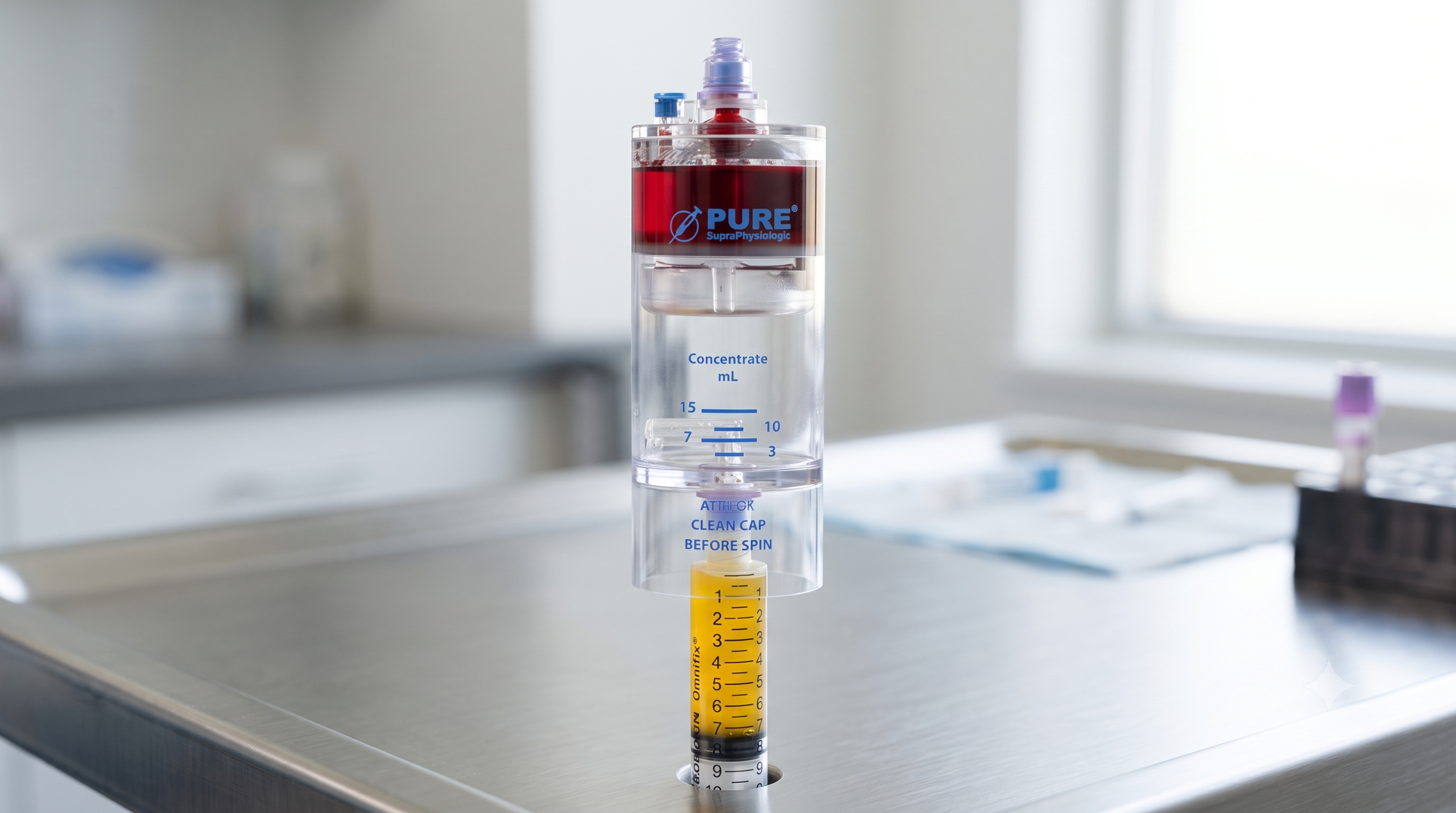
Platelet-rich plasma (PRP) therapy is one of the most established and researched forms of regenerative medicine. It involves drawing a small sample of blood, processing it in a centrifuge to isolate the platelet-rich layer, and injecting that concentrated plasma into the area of injury under ultrasound or fluoroscopic (x-ray) guidance for accuracy and safety.
Platelets release growth factors, signaling proteins, and anti-inflammatory messengers that help reduce inflammation, attract the body’s own repair cells, support new blood vessel formation, and rebuild tissue. These combined effects support healing and improve how tissues recover after injury, and also after surgery.
Learn more about PRP:
- What is PRP?
- PRP for Knee Pain
- PRP for Back Pain
- PRP for Shoulder Injuries
- PRP for Elbow & Tendon Injuries
Bone Marrow Aspirate Concentrate (BMAC)
BMAC is derived from a small sample of bone marrow, typically taken from the pelvic bone. The sample is processed to concentrate regenerative cells and natural growth factors that support healing and help reduce inflammation.
BMAC is generally reserved for more complex or advanced cases — particularly when joint degeneration is more significant, or when PRP alone may not provide sufficient biological support. Like PRP, BMAC works by sending signals that help the body repair itself rather than directly replacing tissue.
Learn more about BMAC:
BMAC is not going to fix large structural tears, or be helpful in cases where surgery is clearly indicated. Candidacy is evaluated carefully during consultation.
How PRP and BMAC Fit Into the Practice
At this practice, regenerative treatments are one component of a broader diagnostic and treatment framework. Imaging findings, functional capacity, overall health, and prior treatment history all inform whether PRP, BMAC, or another approach — such as image-guided injections or neuromodulation — is most appropriate for a given patient.
Dr. Murakami works closely with referring physicians, orthopedic surgeons, and rehabilitation specialists to ensure regenerative treatments are integrated thoughtfully into each patient’s overall care plan.
Are You a Candidate?
PRP or BMAC may be worth discussing if you:
- Have joint, tendon, or spine pain with imaging showing mild to moderate degeneration
- Have not achieved adequate relief with physical therapy, medications, or conventional injections
- Are looking to delay or avoid surgery and want to explore evidence-based alternatives
- Are in generally good health and able to follow post-procedure rehabilitation guidance
Candidacy is determined during your consultation. Dr. Murakami will recommend regenerative treatment only when it is likely to be beneficial based on your specific diagnosis and goals.