WHAT IS PRP?
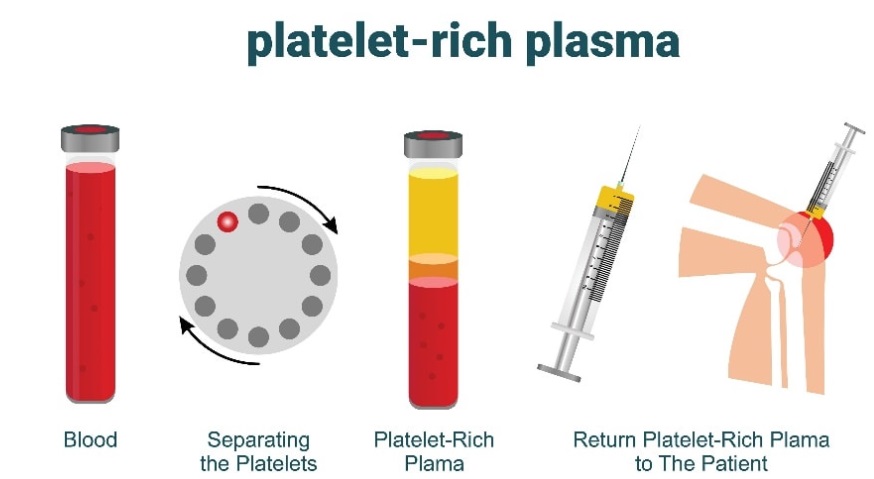
- Platelet-rich plasma (PRP) is a regenerative treatment that uses your body’s own blood to promote healing. A small blood sample is drawn and spun in a centrifuge to create a solution concentrated with platelets. These platelets are rich in growth factors that support tissue repair and reduce inflammation.
- By injecting this platelet-rich solution directly into the injured area, PRP injections can help stimulate healing in joints, tendons, ligaments, and muscles. Many patients choose PRP therapy as a natural option when other treatments have not provided lasting relief.
WHAT TO EXPECT FOR PRP?
- No NSAIDS (ex. Ibuprofen, Mobic, Celebrex) 1 week before or after PRP. NSAIDS will counter the effect of PRP.
- Blood Draw – A small blood sample is taken from your arm.
- Processing – The blood is spun to concentrate the platelets into platelet-rich plasma.
- Injection – The PRP is injected into the injured area, often under ultrasound guidance for accuracy.
Joints & Spine BENEFIT FROM PRP
Research shows that PRP injections may help patients with a range of musculoskeletal conditions, and can be injected into joints, tendons and spinal discs. It can help with conditions such as:
- Mild to moderate knee osteoarthritis
- Rotator cuff tendinopathy (shoulder pain)
- Shoulder arthritis
- Tennis elbow and golfer’s elbow
- Hip arthritis (hip pain)
- Achilles tendon injuries
- Neck arthritis
- Low back arthritis
- Degenerative disc disease
WHAT TO EXPECT AFTER PRP TREATMENT
- Activity: You can usually return to light activity right away, though mild soreness is common.
- Recovery: Most patients resume normal routines in a few days. High-impact sports may require a gradual return.
- Results: Improvements often develop gradually, with pain relief and better function appearing within 2–6 weeks.
- Number of Injections: Some patients respond after one PRP session, while others may benefit from a short series.
SAFETY AND SIDE EFFECTS OF PRP
Because PRP is made from your own blood, allergic reactions are extremely rare. Temporary side effects may include:
- Soreness or swelling at the injection site
- Mild bruising
- Rare complications such as infection
PRP vs. STEROID INJECTIONS
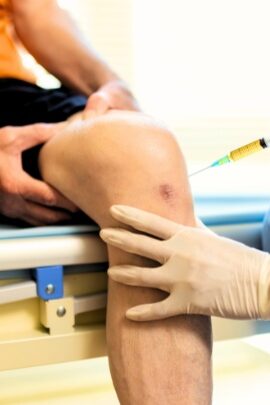
Steroid shots can relieve pain quickly by reducing inflammation, but may weaken tissues if used repeatedly. PRP therapy works differently—it uses your own body’s defense mechanisms to induce healing and reduce inflammation. There are minimal to no side effects from the PRP itself, since it is your own blood product. Patients looking for a more natural and longer-lasting solution often consider PRP. Of note, PRP will not create a new joint or tendon with today’s science but it will create a pro-healing environment into the region where it is injected.
IS PRP RIGHT FOR YOU?
PRP injections are not a one-size-fits-all solution. The PRP injections to be most effective for mild to moderate injuries and degenerative joint conditions. Your individual health, goals, and type of injury will guide whether PRP is the right treatment.
KEY TAKEAWAYS
- PRP (platelet-rich plasma) uses your own blood to stimulate healing.
- The procedure is performed in-office and usually takes under an hour.
- Best studied for tendon injuries and mild osteoarthritis.
- Most patients notice results within weeks.
- Safe and well-tolerated, with minimal downtime.