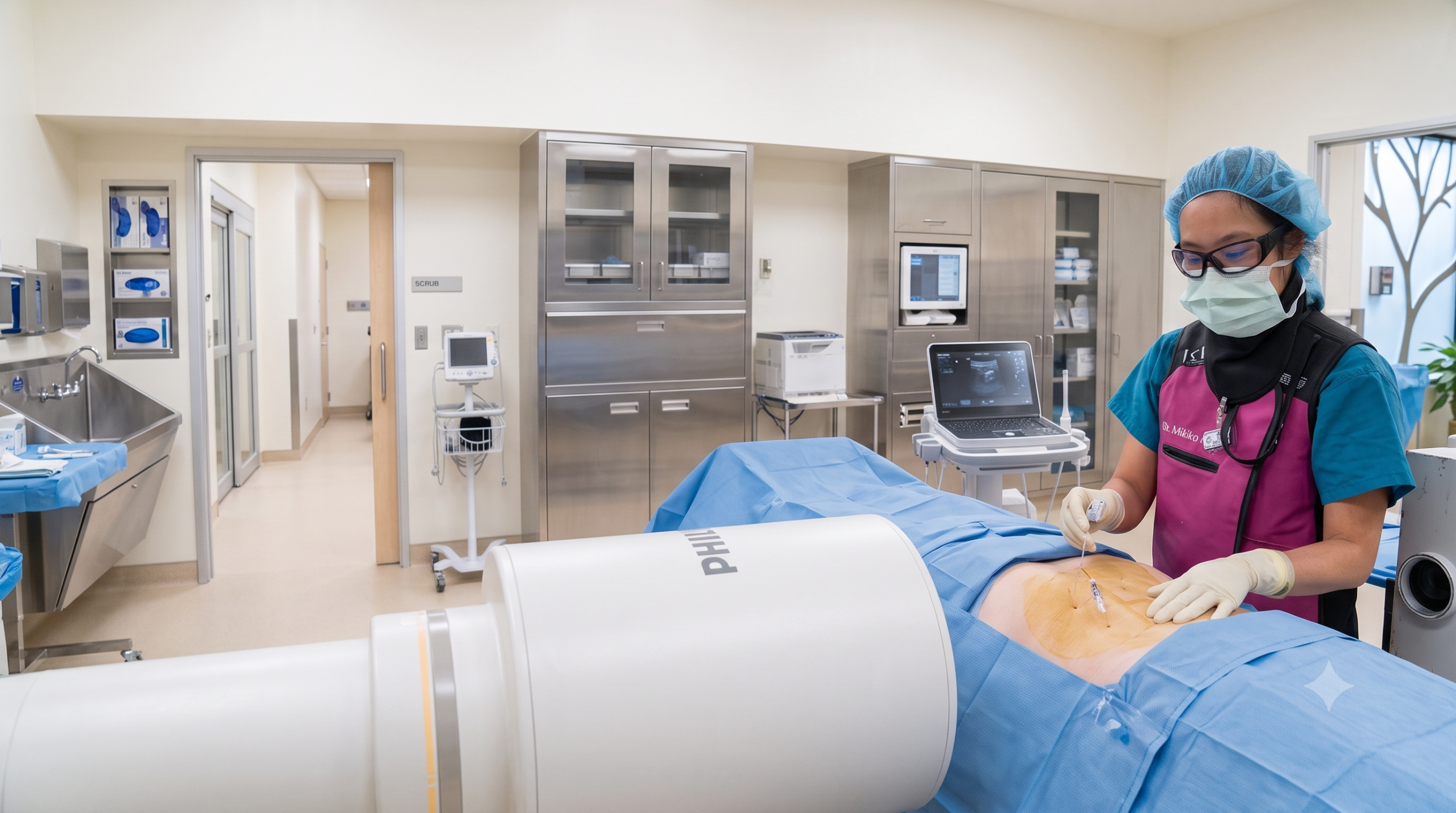
X-ray and Ultrasound-Guided Injections
Dr. Murakami performs image-guided spine and joint injection procedures for patients in Walnut Creek and throughout the East Bay.
These procedures are used to reduce pain, improve mobility, and support rehabilitation when symptoms persist despite appropriate conservative treatment. Procedures are recommended only when clinically appropriate and are integrated with rehabilitation and ongoing functional assessment.
Joint Injections
Joint injections are used to diagnose and treat pain and inflammation involving the shoulder, hip, knee, and other peripheral joints. Injections may be diagnostic, therapeutic, or both — helping to identify the source of pain and provide targeted relief.
Joint injections are commonly used for:
- Osteoarthritis and degenerative joint disease
- Post-traumatic joint pain
- Inflammatory joint conditions
- Capsulitis and restricted joint motion
- Persistent joint pain following injury or surgery
Depending on the clinical indication, injections may include local anesthetic, anti-inflammatory medication, or biologic therapies such as platelet-rich plasma (PRP). Image guidance is used to improve accuracy and safety.
Epidural Injections (Cervical, Thoracic, and Lumbar Spine)
Epidural injections deliver medication into the epidural space surrounding spinal nerves to reduce inflammation, relieve nerve irritation, and improve function in patients with spine-related pain.
Epidural injections may be performed in the:
- Cervical spine (neck)
- Thoracic spine (mid-back)
- Lumbar spine (low back)
Epidural injections are often considered for patients with:
- Disc herniation or disc-related pain
- Spinal stenosis
- Radicular pain radiating into the arm or leg
- Inflammatory nerve compression
These injections may reduce pain and allow patients to participate more fully in physical therapy and rehabilitation.
Lumbar Disc Injections with Biologics
For select patients with discogenic low back pain, Dr. Murakami performs lumbar disc injections using biologic therapies such as platelet-rich plasma (PRP). These injections address pain arising from the intervertebral disc itself rather than nerve compression.
Lumbar disc injections may be considered for:
- Chronic low back pain felt to be discogenic in origin
- Disc degeneration without significant instability
- Persistent axial low back pain that has not responded to conservative care
- Imaging findings consistent with disc pathology that correlates with symptoms
Patient selection is critical. The decision to proceed is based on clinical evaluation, imaging review, and a thorough discussion of realistic expectations.
Trigger Point Injections
Trigger point injections treat focal areas of muscle spasm and myofascial pain that contribute to localized or referred pain patterns.
Commonly helpful for:
- Neck, shoulder, and upper back muscle pain
- Low back or pelvic muscle pain
- Overuse or postural muscle dysfunction
- Myofascial pain syndromes
These injections are typically combined with stretching, physical therapy, and movement-based rehabilitation to improve durability of results.
Nerve Blocks
Nerve blocks target specific nerves or nerve branches contributing to pain. They are often used to clarify pain sources and guide treatment planning — helping determine the most appropriate next steps in care.
Nerve blocks may be helpful for:
- Spine-related neck or back pain
- Nerve-mediated or radicular pain
- Post-injury or post-surgical pain
- Certain headache or facial pain conditions
Radiofrequency Ablation (RFA)
Radiofrequency ablation reduces pain by interrupting pain signals transmitted by small sensory nerves, most commonly those supplying the facet joints of the spine.
RFA may be considered when:
- Pain is chronic and facet-mediated
- Diagnostic nerve blocks have provided temporary but meaningful relief
- Conservative treatments have been optimized
The goal of RFA is to improve functional tolerance for daily activities such as standing, walking, and prolonged sitting.
Spinal Cord Stimulation
Spinal cord stimulation is considered for select patients with chronic pain that has not responded to more conservative therapies.
It may be appropriate for:
- Chronic spine-related pain
- Persistent pain following spine surgery
- Neuropathic pain syndromes
- Certain complex or centralized pain conditions
Evaluation includes careful patient selection and typically a temporary trial prior to permanent implantation. Dr. Murakami coordinates closely with referring physicians throughout this process.
Sympathetic Nerve Blocks
Sympathetic nerve blocks evaluate and treat certain complex pain conditions involving the autonomic nervous system.
Most commonly used for:
- Complex Regional Pain Syndrome (CRPS)
- Sympathetically mediated pain
- Pain associated with abnormal temperature or color changes following injury
A Collaborative, Function-Focused Approach
Injection procedures are one component of a broader care strategy. Dr. Murakami integrates these interventions with rehabilitation, activity modification, and ongoing functional assessment — working closely with primary care physicians, orthopedic and spine surgeons, rheumatologists, and physical and occupational therapists.
The shared goal is to reduce pain, restore function, and help patients return to meaningful activity.